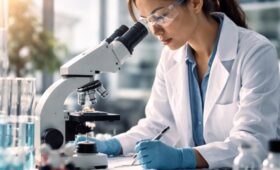
In the realm of microbiology and applied sciences, each discovery and research development offers a unique opportunity to push the boundaries of our knowledge. The journey from hypothesis to tangible results is one that requires careful planning, adaptability, and a keen understanding of both the complexities of microorganisms and the technologies used to study them. This article will provide valuable insights and advice for those looking to embark on or currently navigating this scientific expedition.
Choisir la bonne approche pour votre recherche
The first step in any scientific journey is choosing a viable and impactful research question. This often involves extensive literature reviews to identify gaps in current knowledge. Once a question is formed, selecting the appropriate methodologies and experimental designs is crucial. Consider whether traditional methods or novel technologies, such as CRISPR-Cas9 for genetic manipulation or advanced bioinformatics tools, might best serve your research goals.
Maîtriser les techniques de laboratoire essentielles
Proficiency in core laboratory techniques is a cornerstone of successful microbiological research. Ensuring accuracy and precision in techniques like PCR, chromatography, and microscopy can save time and resources in the long run. Continuous training and practice are vital, as is maintaining a clean and organized lab environment to avoid contamination and errors.

Collaborer et partager les connaissances
Collaboration is a key aspect of scientific progress. Working with other researchers, either within your institution or through cross-institutional partnerships, can enhance the quality and scope of your research. Attending conferences and workshops not only allows for the sharing of results but also helps in gaining new perspectives and potential collaborators. Open dialogue and constructive feedback are invaluable for refining research and ensuring relevance.
Faire face aux échecs et apprendre de chaque expérience
In scientific research, setbacks are inevitable. Experiments may fail, and data may contradict hypotheses. However, these challenges are integral to the learning process. Keeping detailed lab notes can help in troubleshooting and identifying the cause of errors. Moreover, each failure provides lessons that can lead to future successes. Adopting a growth mindset and resilience is crucial in navigating these obstacles.
Intégrer les innovations technologiques
The rapid evolution of technology continuously transforms the landscape of microbiology. Innovations such as next-generation sequencing, machine learning, and automation are accelerating research capabilities. Staying abreast of these advancements and integrating them into your work can significantly enhance both efficiency and the depth of your findings. Investing in cutting-edge technology is often worthwhile for long-term benefits.
Assurer la communication des résultats
Effective communication of scientific findings is essential. Writing clear and concise research papers, presenting at conferences, and engaging with the public through blogs and social media can widely disseminate your work. Tailor your communication to your audience, whether it be fellow scientists, policymakers, or the general public, to maximize the impact of your research.
The path of scientific research in microbiology and applied sciences is rich with challenges and opportunities. By thoughtfully selecting research questions, mastering essential techniques, embracing collaboration, learning from failures, and leveraging technological advancements, scientists can make significant contributions to the field. Continuing this journey with perseverance and curiosity will undoubtedly lead to new discoveries and understanding.